Budgeting for Beginners is very essential for everyone. Har month 1 tareek ko salary account mein aati hai, achha feel hota hai. Fir rent nikalta hai, EMI kat-ti hai, kuch UPI payments ho jaate hain, thoda Swiggy, thoda Amazon, thoda Zomato — aur jab 25 tareek aati hai, wallet khaali hota hai. Aap sochte ho: “Salary itni thi, gayi kahan?”
Yeh problem almost har Indian salaried ya freelancing individual ke saath hoti hai — chahe income ₹25,000 ho ya ₹2,50,000. Reason simple hai: bina budget ke, paisa apni marzi se kharch hota hai, aapki marzi se nahi.
Is guide mein hum step-by-step samjhenge ki monthly budget kaise banaye, popular 50/30/20 rule kya hai, aur ek beginner apni income ko needs, wants, savings aur investments mein kaise divide kar sakta hai — bina kisi confusion ke. Agar aap personal finance mein bilkul naye hain, toh humara Start Here guide se shuru karna helpful rahega.

📑 Is Article Mein Kya Milega (Table of Contents)
- Budget Kya Hai?
- Budget Banana Kyun Zaroori Hai?
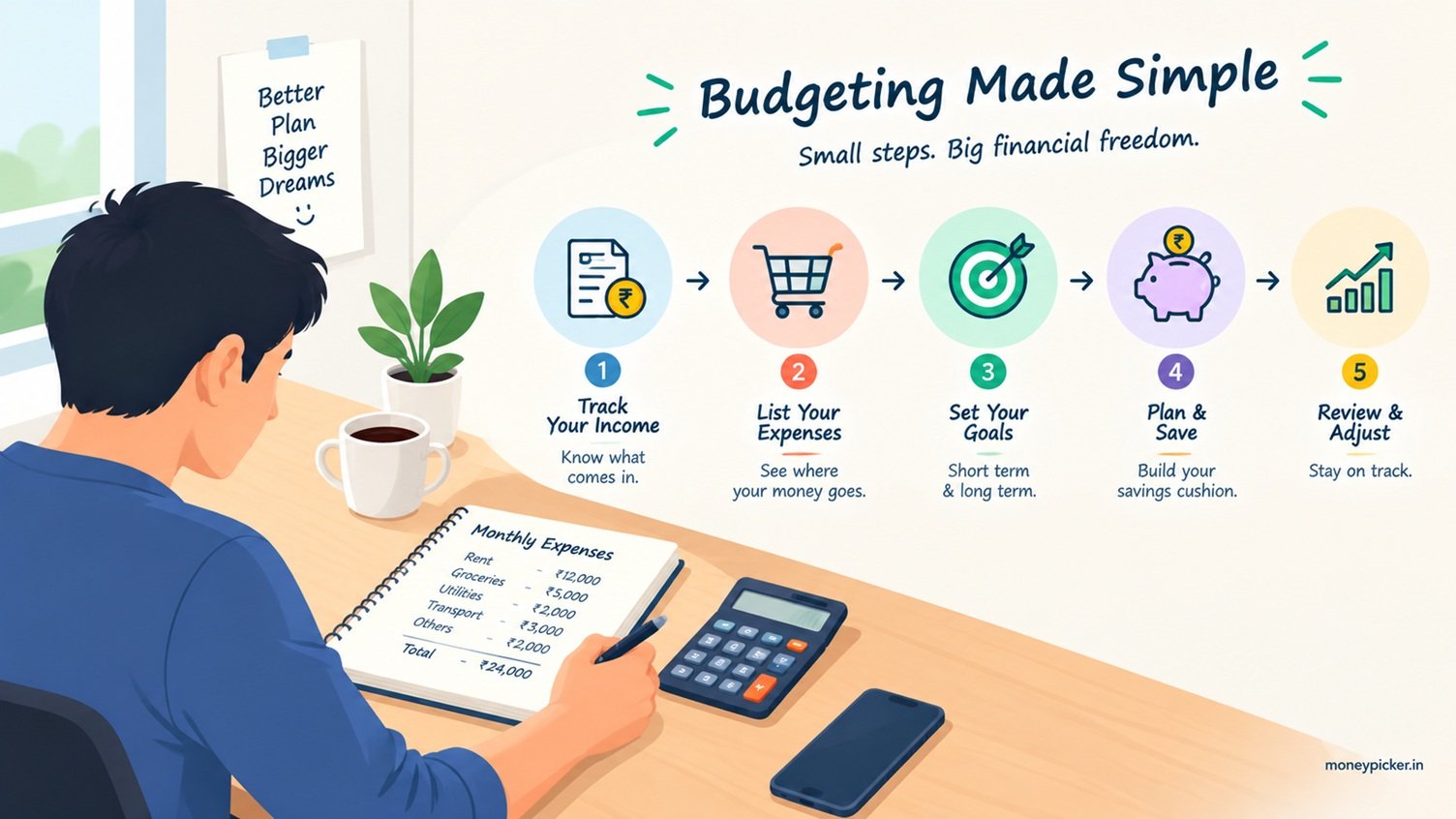
- Monthly Budget Kaise Banaye? Step-by-Step
- Realistic ₹60,000 Monthly Budget Example
- 50/30/20 Rule Kya Hai?
- 50/30/20 Ko Apni Situation Ke Hisaab Se Adapt Karna
- 50/30/20 Ke Alternatives
- Budgeting for Different Income Types
- Common Budgeting Mistakes
- Annual/Irregular Expenses Kaise Handle Karein
- Budget + Emergency Fund + Investments
- Har Month Budget Improve Kaise Karein
- Free Beginner Budget Template
- Related MoneyPicker Tools
- FAQs
Budget Kya Hai?
Simple bhasha mein, budget ek plan hai jo pehle se decide karta hai ki aapki monthly income ka kitna part kahan jayega — needs, wants, savings aur investments mein. Yeh koi restriction nahi hai jo aapko kharch karne se rokta hai; yeh sirf ek tareeka hai har rupee ko ek purpose dene ka.
Bahut log sochte hain ki “expenses track karna” hi budgeting hai. Actually, tracking sirf ek part hai. Budgeting mein aap pehle decide karte ho ki paisa kahan jayega, aur tracking sirf yeh confirm karta hai ki plan follow ho raha hai ya nahi.
Kharch ho jaane ke baad record karna — sirf past dikhata hai
Kharch hone se pehle plan karna — future ka control deta hai
Aur yeh bhi samajhna zaroori hai — high salary ka matlab automatically financial health nahi hota. Bahut se log jo ₹1,50,000+ kamate hain, unke paas bhi month-end mein savings zero hoti hai, kyunki unke paas koi structure nahi hota. Budgeting aapko us paisa par visibility aur control deta hai jo pehle “somewhere” chala jaata tha.
Budget Banana Kyun Zaroori Hai?
Budgeting koi complicated financial skill nahi hai — yeh ek habit hai jo aapki daily money decisions ko better banati hai. Practical benefits kuch is tarah hain:
- Overspending control: Aapko pata rehta hai ki kis category mein limit cross ho rahi hai.
- Better savings: Savings “leftover” nahi, balki ek planned amount ban jaati hai.
- Consistent investing: SIP jaisi investments regularly chalti rehti hain, bina disturb hue.
- EMI/debt management: Aap dekh sakte ho ki EMI aapki income ka kitna healthy percentage hai.
- Emergency fund building: Har month thoda-thoda amount ek safety cushion banata hai.
- Clear financial goals: Chahe wo bike ho, ghar ho, ya retirement — budget un goals ko realistic banata hai.
- Kam financial stress: Jab paisa kahan ja raha hai pata hota hai, toh anxiety naturally kam ho jaati hai.
*Yeh sirf ek illustrative comparison hai jo dikhata hai ki structured budgeting savings rate par kya asar daal sakta hai — koi guaranteed outcome nahi hai, actual result har person ki income aur habits par depend karega.
Agar aap apni overall personal finance journey — budgeting, saving, investing sab kuch — ek jagah se beginner-friendly tarike se seekhna chahte hain, toh MoneyPicker.in par aur bhi free guides available hain, jaise humara Investing for Beginners section.
Monthly Budget Kaise Banaye? Step-by-Step Guide
Ab aate hain is article ke sabse important part par — actual process jo aap is hafte se hi start kar sakte ho.
Income Calculate Karein
Expenses List Karein
Needs vs Wants
Savings Pehle Allocate
Spending Limits Set
Track Karein
Month-End Review
Step 1: Apni Monthly Take-Home Income Calculate Karein
Sabse pehle, apni take-home income (in-hand salary) calculate karein — yeh aapki gross CTC (Cost to Company) se different hoti hai. CTC mein PF, gratuity, aur various allowances include hote hain jo directly account mein nahi aate. Budget hamesha take-home amount par banayein, gross salary par nahi.
Example: Agar CTC ₹8 lakh/year hai, toh take-home shayad ₹55,000–₹60,000/month ho, PF deduction, professional tax aur TDS ke baad. Freelancers ke liye, average monthly income pichle 6 mahine ke actual receipts se calculate karein, kisi ek best month se nahi.
*Illustrative example — actual CTC-to-take-home ratio aapke PF, tax slab aur company structure ke hisaab se different hoga.
Step 2: Apne Monthly Expenses List Karein
Ab har category ka expense likhein — bank statement aur UPI history dekh kar. Common categories:
- Rent / home loan EMI
- Groceries
- Electricity, water
- Internet aur mobile recharge
- Transport (fuel, cab, metro)
- Other EMIs (car, personal loan, credit card)
- Insurance premiums
- Subscriptions (OTT, apps)
- Eating out aur food delivery
- Shopping aur lifestyle
Inhe do types mein baantein — fixed expenses (rent, EMI, insurance — jo har month same rehte hain) aur variable expenses (groceries, shopping, eating out — jo month-to-month change hote hain).
Step 3: Needs aur Wants Ko Separate Karein
Yeh budgeting ka sabse zaroori concept hai. Needs wo hain jinke bina survive nahi ho sakta — rent, groceries, EMI, utilities. Wants wo hain jo life better banate hain lekin essential nahi hain — dining out, shopping, entertainment.
✅ Needs
- Rent ya home loan EMI
- Groceries aur essentials
- Electricity, water, gas
- Basic mobile aur internet
- Transport to work
- Insurance premiums
- Loan/EMI payments
🛍️ Wants
- Food delivery aur dining out
- OTT subscriptions
- Shopping (non-essential)
- Travel/vacations
- Latest gadgets upgrade
- Entertainment, movies
- Premium lifestyle upgrades

Step 4: Apni Savings aur Investments Pehle Allocate Karein
Bahut se beginners galti karte hain — wo pehle sab kharch karte hain, aur jo bachta hai wahi “save” karte hain. Problem yeh hai ki generally month-end tak kuch bachta hi nahi.
Isliye “pay yourself first” approach better hai — salary aate hi savings aur investments ka fixed amount pehle alag kar dein, jaise ek automatic rule ho. Baaki amount se expenses manage karein.
Yeh bhi clear samajhna zaroori hai — emergency fund, savings aur investments teeno alag buckets hain. Emergency fund short-term financial shocks ke liye hai (job loss, medical emergency), regular savings kisi near-term goal ke liye ho sakti hain, aur investments (jaise SIP) long-term wealth creation ke liye hote hain. Agar aap SIP start karne ka soch rahe hain, toh SIP Calculator se dekh sakte hain ki chhoti monthly investment lambe time mein kitni badh sakti hai.
Step 5: Monthly Spending Limits Set Karein
Har category ke liye ek reasonable limit set karein — jaise groceries ₹6,000, eating out ₹2,000, shopping ₹2,500. Yeh limits aapki actual spending history par based honi chahiye, kisi random guess par nahi.
Step 6: Budget Follow Karein aur Track Karein
Weekly ek baar apne UPI/bank app check karein aur dekhein ki kaunsi category limit ke close ya cross ho rahi hai. Isse aap mid-month hi adjust kar sakte hain, month-end surprise se bachte hain.
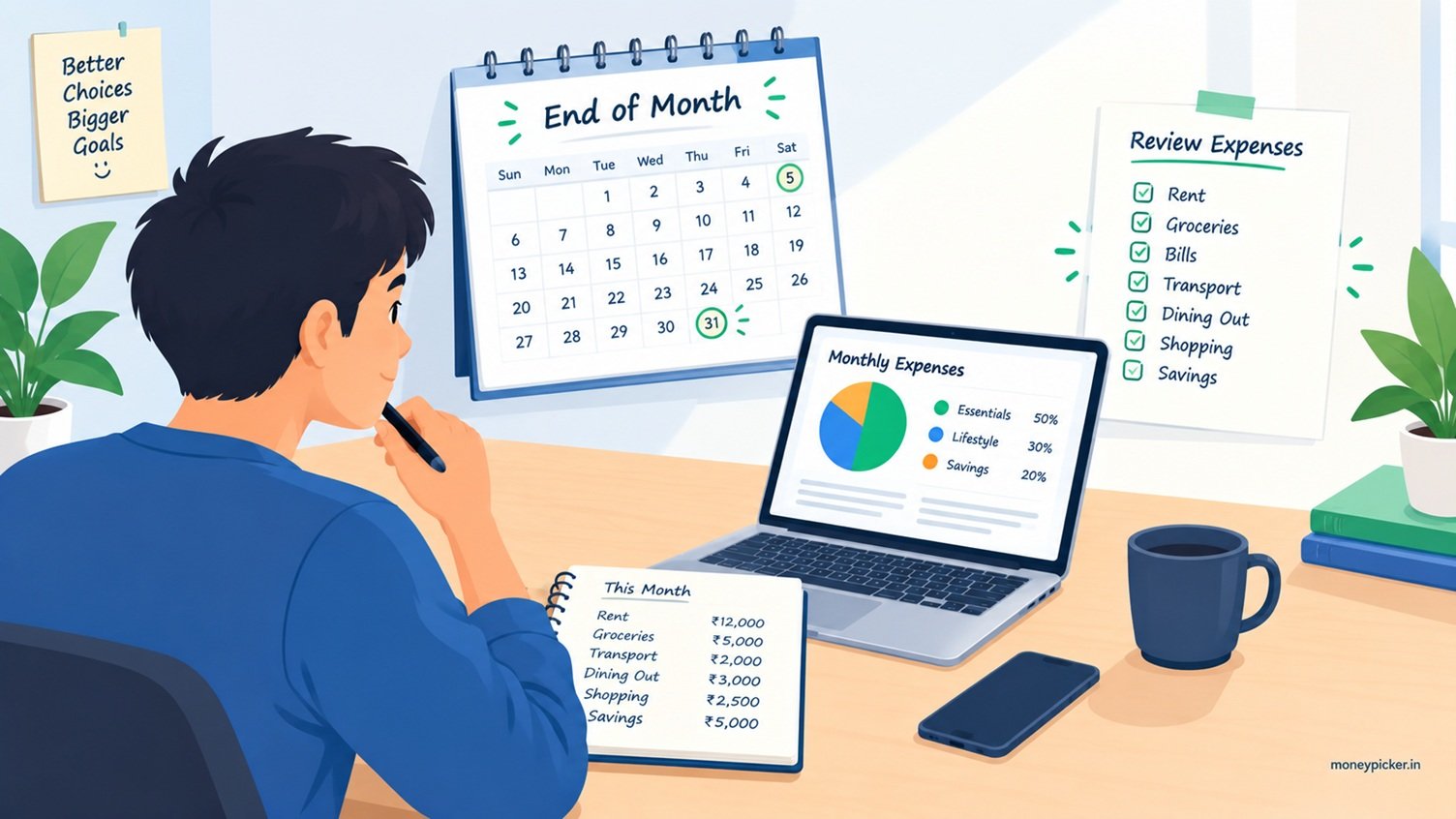
Step 7: Month-End Review Karein
Month khatam hone par, Budgeted vs Actual Spending compare karein. Jahan overspend hua wahan reason samjhein, aur agle month ka budget us learning ke hisaab se adjust karein.
Ek Realistic ₹60,000 Monthly Budget Example
Yahan ek sample budget hai kisi aise person ka jiski take-home salary ₹60,000/month hai. Yeh sirf ek illustration hai — aapka actual allocation aapke city, family responsibilities, rent aur goals par depend karega.
| Category | Type | Amount (₹) |
|---|---|---|
| Rent | Need (Fixed) | 15,000 |
| Groceries | Need (Variable) | 6,000 |
| Utilities (electricity/internet/mobile) | Need (Fixed) | 3,000 |
| Transport | Need (Variable) | 3,000 |
| EMI | Need (Fixed) | 8,000 |
| Insurance Premiums | Need (Fixed) | 1,500 |
| Lifestyle / Wants (dining, shopping, subscriptions) | Want (Variable) | 10,500 |
| Savings | Savings | 6,000 |
| Investments (SIP, etc.) | Investment | 5,000 |
| Emergency Fund | Savings | 2,000 |
| Total | — | 60,000 |
Is example mein needs approx ₹36,500 (61%), wants ₹10,500 (17.5%), aur savings+investments ₹13,000 (21.5%) ban rahe hain. Yeh 50/30/20 se thoda different hai — kyunki EMI aur rent ki wajah se needs thoda zyada hain. Yeh perfectly normal hai; important yeh hai ki savings ek fixed, planned amount ho, chahe percentage exact 50/30/20 na ho.
50/30/20 Rule Kya Hai?
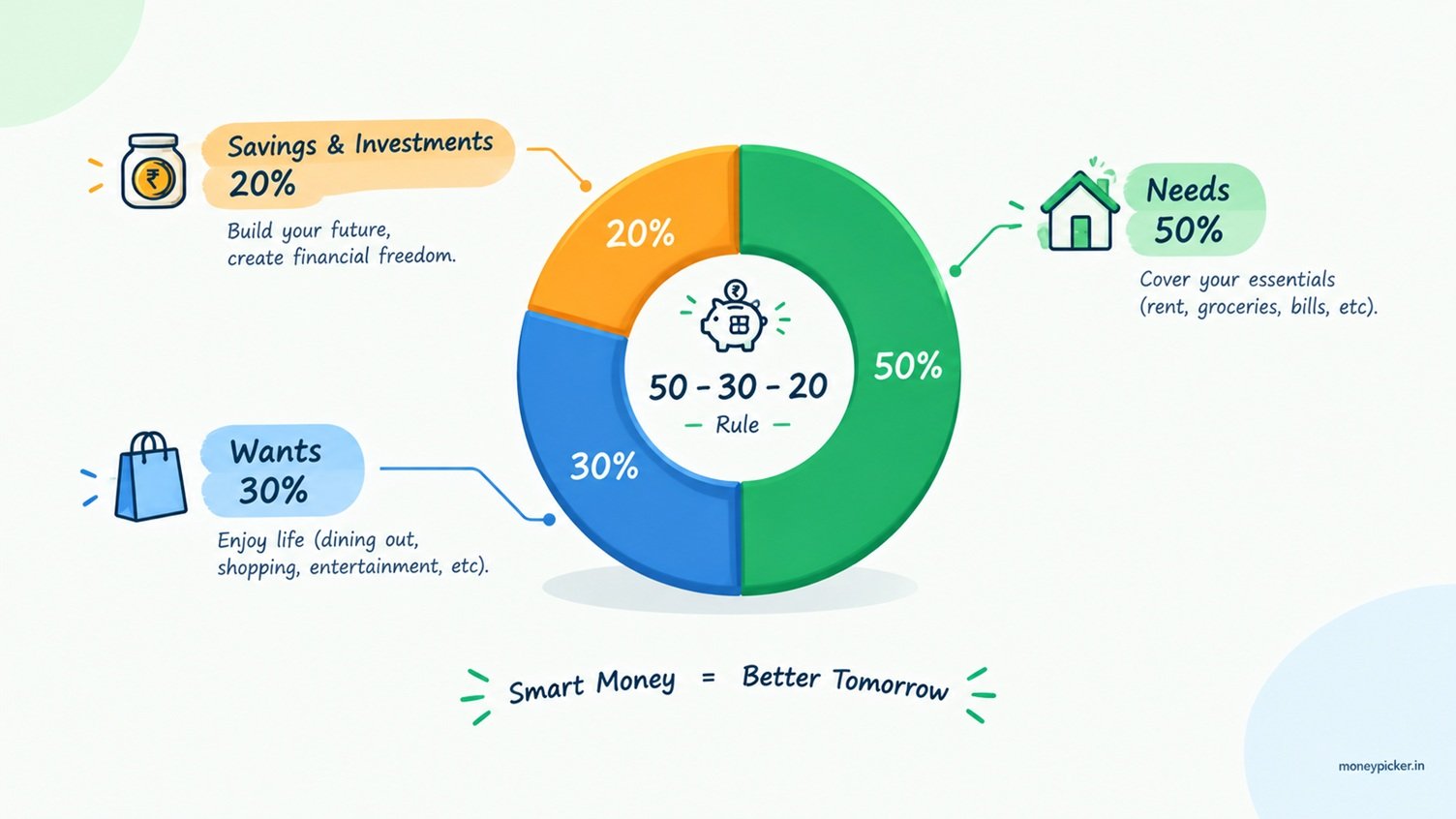
50/30/20 rule ek popular aur simple budgeting framework hai jo income ko teen buckets mein divide karta hai:
Needs
50%Rent, EMI, groceries, utilities, insurance — jo essential hain
Wants
30%Dining out, shopping, entertainment, travel — lifestyle choices
Savings/Goals
20%Emergency fund, investments, financial goals
₹60,000 monthly income ke example mein, 50/30/20 rule ka breakdown kuch is tarah hoga:
| Category | Percentage | Amount (₹) |
|---|---|---|
| Needs | 50% | 30,000 |
| Wants | 30% | 18,000 |
| Savings/Investments | 20% | 12,000 |
| Total | 100% | 60,000 |
50/30/20 Rule India Mein Kitna Practical Hai? Ise Apni Situation Ke Hisaab Se Adapt Karein
Yeh samajhna bahut zaroori hai — 50/30/20 ek starting point hai, koi mandatory formula nahi. Real life mein har person ki situation different hoti hai:
- Mumbai ya Bengaluru jaise metro cities mein rent hi income ka 35-40% le sakta hai, jisse needs 50% se zyada ho jaate hain.
- Agar aapka home loan ya car EMI bada hai, toh shuru mein 50/30/20 follow karna mushkil ho sakta hai.
- Jo log parents ko financially support karte hain, unke needs naturally higher honge.
- Ek beginner jiski salary abhi kam hai, uske liye 20% savings possible na ho — aur yeh normal hai.
- Kuch log kisi specific goal (jaise down payment) ke liye aggressively 30-40% bhi save karte hain.
Agar aap abhi 20% save nahi kar pa rahe, toh sharminda hone ki zaroorat nahi — chhote percentage se shuru karein (jaise 5-10%) aur gradually badhayein jaise income badhti hai ya expenses optimize hote hain. Isके liye Step-Up SIP Calculator useful ho sakta hai — yeh dikhata hai ki income badhne ke saath investment amount gradually increase karne se long-term corpus kitna better ban sakta hai.
50/30/20 Ke Alternatives — Doosre Budgeting Approaches
Agar 50/30/20 aapki situation ke liye fit nahi baith raha, toh kuch alternative approaches try kar sakte hain:
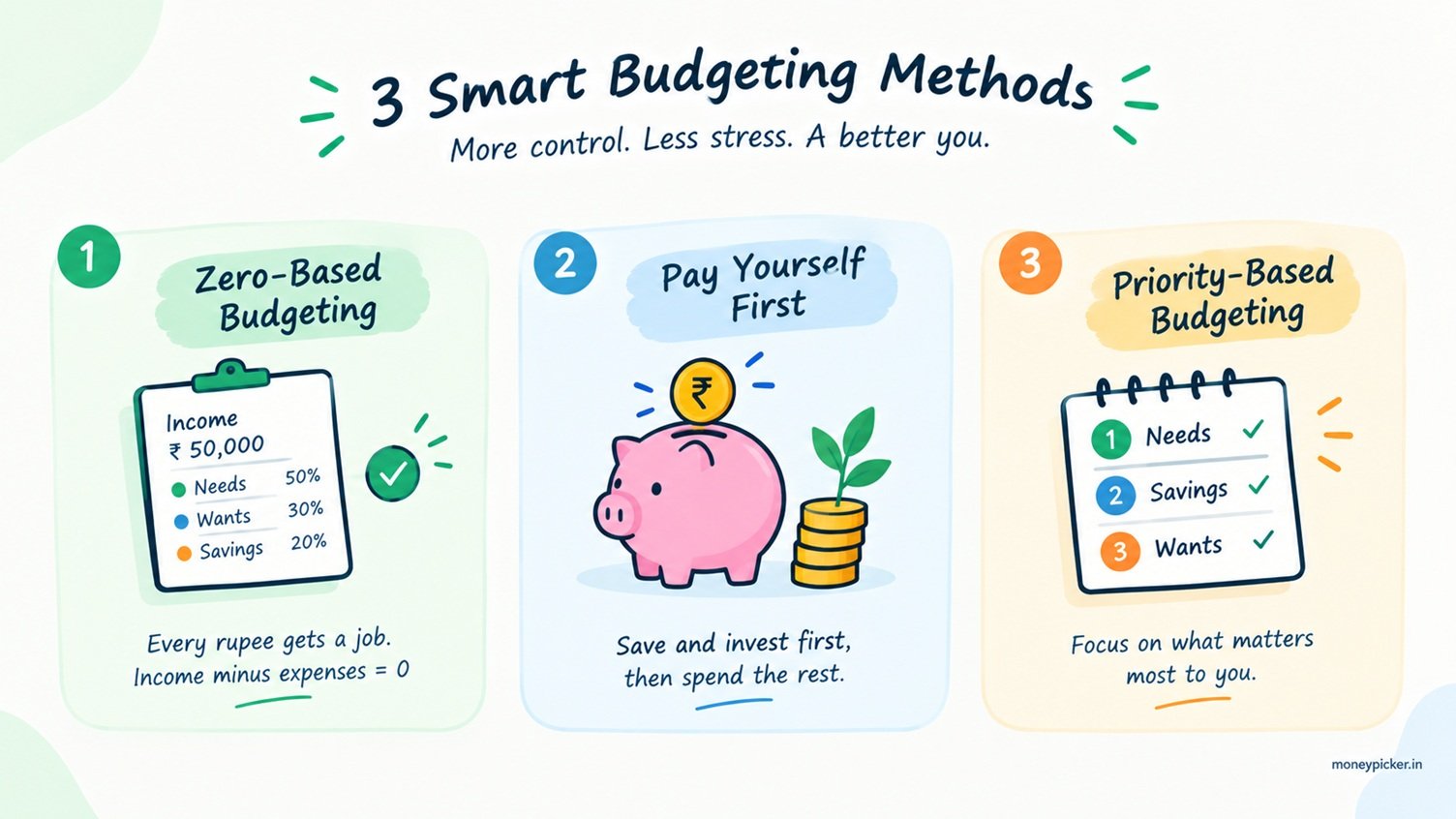
Zero-Based Budgeting
Is approach mein income ka har rupee ek specific purpose ko assign kiya jaata hai — expenses + savings + investments milakar total income ke barabar honi chahiye, kuch bhi “unassigned” nahi rehta. Yeh un logon ke liye useful hai jo detailed control chahte hain.
Pay-Yourself-First Approach
Isme sabse pehle ek fixed savings/investment amount alag kar diya jaata hai, aur baaki se expenses chalaye jaate hain — chahe wo percentage 20% ho ya 10%. Yeh beginners ke liye simple aur effective hai.
Priority-Based Budgeting
Isme categories ko priority ke hisaab se rank kiya jaata hai — jaise pehle EMI aur rent, fir essentials, fir goals, aur last mein discretionary spending. Yeh un logon ke liye useful hai jinki income limited ho ya jinke financial obligations zyada hon.
Budgeting for Different Types of Income
Salaried Employees
Fixed monthly income hone ki wajah se, ek simple fixed monthly budget banana easiest hota hai. Income predictable hai, isliye categories aur limits set karna straightforward hai.
Freelancers / Variable-Income Earners
Jab income har month different ho, toh pichle 6-12 mahine ki average ya sabse kam mahine ki income ko base bana kar budget banayein. Achhe months mein extra amount seedha savings/investments mein daalein, expenses inflate na karein. Extra amount ko SIP mein daalne se pehle SIP Calculator se dekh sakte hain ki wo lump-sum top-ups long-term mein kitna fark daal sakte hain.
Beginners with Irregular Income
Agar income unpredictable hai, toh essential expenses ko sabse conservative (lowest expected) income estimate par base karein, aur ek larger cash buffer maintain karein — normal 3-6 mahine ke bajaye, kam se kam 6-9 mahine ka.
Common Budgeting Mistakes Jo Beginners Karte Hain
Chai, parking, chhote UPI payments — inhe bhi track karein, yeh milkar bada amount ban jaate hain.
Credit limit borrowed paisa hai, income nahi. Budget sirf actual income par banayein.
Insurance, festivals, travel jaise yearly kharche bhool jaate hain — inhe monthly divide karein.
Agar aap normally ₹5,000 groceries par kharch karte hain, toh limit ₹2,000 rakhna fail hoga.
EMI ek fixed commitment hai — ise “needs” mein zaroor shamil karein. Exact monthly figure ke liye EMI Calculator use kar sakte hain.
Investment cash flow se allocate hoti hai, “kharch” nahi — dono ka treatment alag samjhein.
Savings ko pehle allocate karein, last mein nahi — warna kabhi kuch nahi bachega.
Budget ek living document hai — har month review aur adjust karna zaroori hai.
Har person ki income, city aur responsibilities different hain — apna khud ka budget banayein.
Salary badhne par expenses bhi automatically badh jaate hain — savings percentage bhi badhayein.

Annual/Irregular Expenses Kaise Handle Karein
Bahut se expenses monthly nahi, saal mein ek ya do baar aate hain — jaise:
- Insurance premiums (health/life)
- School/college fees
- Festival expenses
- Travel/vacation
- Vehicle servicing
- Annual subscriptions
- Property-related expenses (maintenance, tax)
- Medical expenses
Inhe handle karne ka simple tareeka hai — annual amount ko 12 se divide karein aur har month utna amount ek separate “sinking fund” mein daal dein. Example: agar health insurance premium ₹24,000/year hai, toh har month ₹2,000 alag rakhein. Jab premium due hoga, paisa already ready hoga — koi surprise nahi.
Insurance policies chunte ya renew karte waqt, terms aur premiums samajhne ke liye IRDAI ki consumer education website policyholder.gov.in ek helpful, neutral resource hai.
Budgeting + Emergency Fund + Investments — Sab Kaise Saath Kaam Karte Hain
Budget ka kaam hai ek consistent surplus create karna. Us surplus ka pehla hissa emergency fund mein jaana chahiye — jo financial shocks (job loss, medical emergency, sudden repair) ke liye hota hai. Emergency fund hamesha liquid aur low-risk hona chahiye — jaise savings account ya liquid fund, equity investments mein nahi, kyunki market volatility ke time paisa kam bhi ho sakta hai jab aapko sabse zyada zaroorat ho.
Emergency fund ban jaane ke baad, surplus ka agla hissa investments (jaise SIP) mein jaana chahiye, jo long-term wealth creation aur financial goals ke liye hote hain — jaise retirement, ghar, ya bachchon ki education. Agar aap long-term goal jaise ₹1 crore corpus banane ka plan kar rahe hain, toh ₹1 Crore Calculator se dekh sakte hain ki kitni monthly investment se yeh goal achieve ho sakta hai. Retirement planning ke liye Retirement Corpus Calculator bhi useful reference hai.
Har Month Apna Budget Improve Kaise Karein
Budgeting ek one-time activity nahi, ek ongoing process hai. Har month-end par yeh questions khud se poochein:
- Is month maine kis cheez par overspend kiya?
- Kaunsa expense mujhe surprise kar gaya?
- Kya koi recurring expense reduce ho sakta hai?
- Kya meri savings automatically ho gayi?
- Kya maine plan ke mutabik invest kiya?
- Kya mere financial goals abhi bhi realistic hain?
- Kya meri income change hui hai?
- Agle month kya alag karna chahiye?
Beginner-Friendly Monthly Budget Template
Yeh simple template copy karke aap apne khud ke numbers daal sakte hain aur is hafte se budgeting start kar sakte hain:
| Category | Planned (₹) | Actual (₹) | Difference (₹) |
|---|---|---|---|
| Income | |||
| Rent | |||
| Groceries | |||
| Utilities | |||
| Transport | |||
| EMI | |||
| Wants/Lifestyle | |||
| Savings | |||
| Investments | |||
| Other |
Agar aapka koi EMI hai aur aapko exact monthly outgo calculate karna hai, toh EMI Calculator se accurate figure nikal sakte hain, jisse budget aur bhi precise banega.
Related MoneyPicker Tools

Frequently Asked Questions (FAQs)
Budget kya hota hai?
Budget ek plan hai jo decide karta hai ki aapki monthly income ka kitna hissa needs, wants, savings aur investments mein jayega, taaki paisa purposefully use ho, random tarike se nahi.
Monthly budget kaise banaye?
Apni take-home income calculate karein, expenses list karein, needs aur wants alag karein, savings pehle allocate karein, category-wise limits set karein, aur har month track karke review karein.
50/30/20 rule kya hai?
Yeh ek budgeting framework hai jisme income ka 50% needs, 30% wants, aur 20% savings/investments mein allocate kiya jaata hai — starting point ke roop mein, mandatory formula ke roop mein nahi.
Kya 50/30/20 rule India mein practical hai?
Yeh depend karta hai city, rent aur EMI par. Metro cities mein high rent ki wajah se needs 50% se zyada ho sakte hain — is case mein percentages ko apni situation ke hisaab se adjust karna better hota hai.
Salary ka kitna percent save karna chahiye?
Generally 20% ek achha starting target maana jaata hai, lekin yeh aapki income, expenses aur goals par depend karta hai. Kam se shuru karke gradually badhana bhi ek valid approach hai.
Needs aur wants mein difference kya hai?
Needs essential hote hain jinke bina life chalna mushkil hai (rent, groceries, EMI), jabki wants lifestyle choices hain jo essential nahi hain (dining out, shopping, entertainment).
Agar income irregular hai to budget kaise banaye?
Apni lowest expected monthly income ko base banayein, essential expenses usi par plan karein, aur ek bada cash buffer (6-9 mahine ka) maintain karein taaki low-income months mein bhi obligations manage ho sakein.
Credit card spending ko budget mein kaise include karein?
Credit card se kiya gaya har kharch usi category mein count karein jaisa cash/UPI se kiya hota (jaise shopping, groceries). Credit limit ko kabhi income na samjhein — yeh borrowed paisa hai.
Emergency fund budget ka part hai ya separate?
Emergency fund budget ka hi ek part hai — savings category ke andar isko ek specific allocation dena chahiye, lekin regular savings aur long-term investments se ise alag rakhna chahiye.
Budget follow nahi ho raha ho to kya karein?
Pehle dekhein ki limits realistic hain ya nahi — bahut strict limits usually fail hote hain. Chhote adjustments karein, gradually habit banayein, aur har month review karke budget ko refine karte rahein.
Sources/References: Reserve Bank of India (rbi.org.in), Securities and Exchange Board of India (sebi.gov.in), Association of Mutual Funds in India (amfiindia.com) — general investor education references.